Quantum Scaling Breakthrough: QuantWare's 10,000-Qubit Processor Architecture Overcomes Industry Plateau
Quantum Scaling Breakthrough: QuantWare's 10,000-Qubit Processor Architecture Overcomes Industry Plateau
In Plain English:
This is about a major advance in quantum computers, which are super-powerful computers that work completely differently from regular computers. For years, these quantum computers have been stuck at about 100 processing units (called qubits), which limited what they could actually do. A company called QuantWare has created a new design that supports 10,000 qubits - 100 times more than what's available today. This breakthrough means quantum computers could soon start solving real-world problems in fields like medicine, materials science, and energy that were previously impossible. It's like going from a bicycle to a supersonic jet in terms of computing power.
Summary:
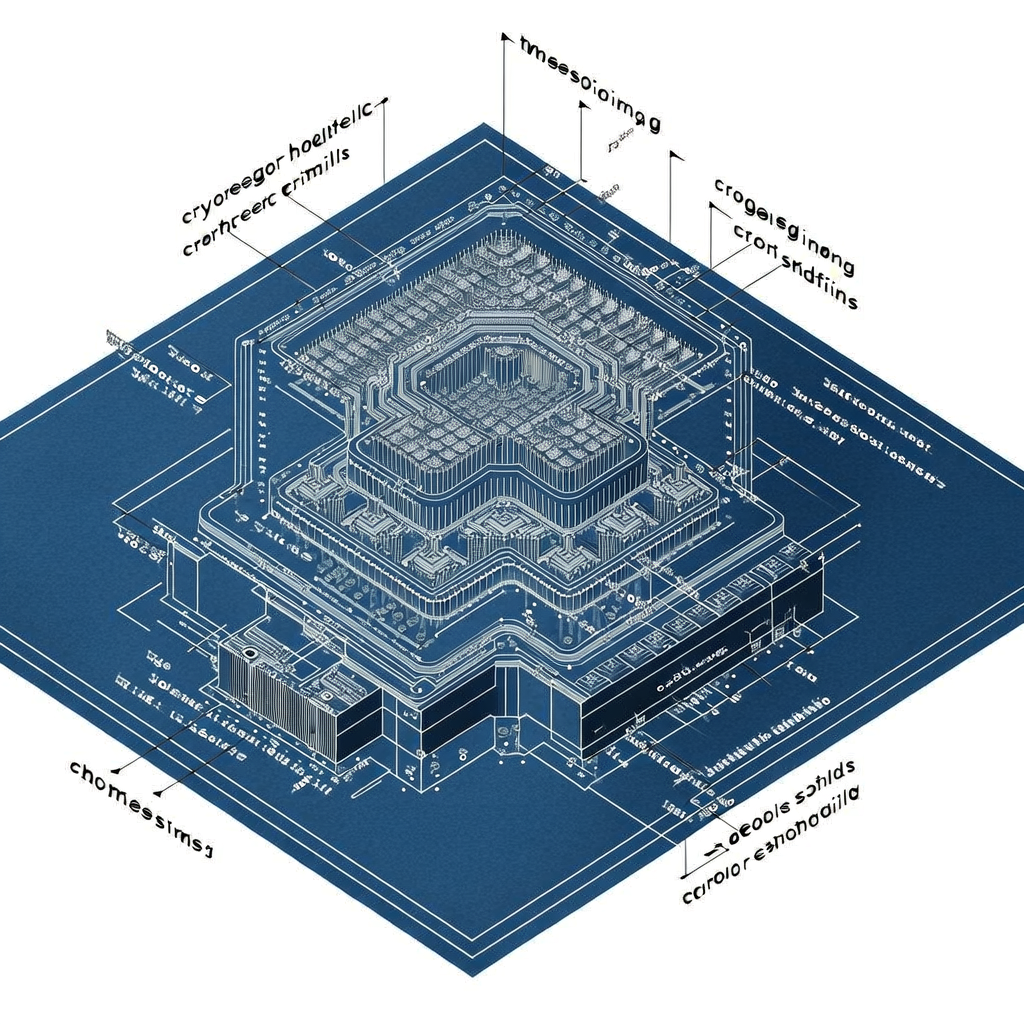
QuantWare has announced a breakthrough quantum processor architecture capable of supporting 10,000 qubits, representing a 100-fold scaling leap over current quantum systems [1]. This development addresses a fundamental bottleneck in quantum computing where commercial systems had plateaued around 100 qubits for nearly a decade [1]. The new architecture uses 3D scaling and chiplet-based design with 40,000 input-output lines, enabling large-scale processors while maintaining reliability and performance [1].
The technology positions itself as an industry scaling standard for superconducting qubit systems and integrates with NVIDIA's NVQLink platform through the CUDA-Q framework [1]. QuantWare simultaneously announced Kilofab, a large-scale fabrication facility opening in 2026 that will expand production capacity twentyfold [1]. Company CEO Matt Rijlaarsdam characterized this as removing the scaling barrier that has forced the field to "theorize about interesting but far-off technologies" [1].
This architecture represents a significant departure from previous approaches where companies linked multiple small processors rather than scaling individual ones, which increased complexity and cost [1]. The first devices are scheduled to ship in 2028, with reservations currently open [1].
[1] QuantWare announcement via Interesting Engineering, 2025
Key Points:
- QuantWare's new Quantum Processor Unit architecture supports 10,000 qubits, 100x larger than current systems
- Quantum computing had been stuck at ~100-qubit scale for nearly a decade due to hardware bottlenecks
- Previous scaling approaches involved linking multiple small processors, increasing complexity and cost
- The new architecture uses 3D scaling and chiplet design with 40,000 I/O lines
- It delivers more compute per dollar and per watt than multi-QPU platforms
- Integrates with NVIDIA's NVQLink through CUDA-Q for hybrid quantum-classical computing
- Kilofab production facility opening in 2026 will expand capacity twentyfold
- First devices ship in 2028, with reservations currently open
- Company claims to already ship more quantum processors than any commercial supplier by volume
Notable Quotes:
- "For years, people have heard about quantum computing's potential to transform fields from chemistry to materials to energy, but the industry has been stuck at 100-qubit QPUs forcing the field to theorize about interesting but far-off technologies." - Matt Rijlaarsdam, CEO of QuantWare [1]
- "This new system finally removes this scaling barrier, paving the way for economically relevant quantum computers." - Matt Rijlaarsdam, CEO of QuantWare [1]
- "With VIO-40K, we're giving the entire ecosystem access to the most powerful, hyper-scaled quantum processor architecture ever." - Matt Rijlaarsdam, CEO of QuantWare [1]
- [1] QuantWare announcement via Interesting Engineering, 2025
Data Points:
- 10,000 qubits supported by new architecture
- 100x scaling over current systems (current max ~100 qubits)
- 40,000 input-output lines in the system
- Google increased from 53 to 105 qubits in six years
- IBM's latest design: 120 qubits
- Kilofab facility opening: 2026
- Production capacity expansion: twentyfold
- First device shipments: 2028
- QuantWare headquarters: Delft, Netherlands
Controversial Claims:
- The claim that this represents a "turning point" for the quantum industry (this is QuantWare's positioning rather than independent verification)
- The assertion that this architecture will become a "scaling standard for the wider industry"
- The characterization that previous multi-processor approaches "slowed real-world progress" (this implies QuantWare's approach is superior but lacks comparative data)
- The claim that QuantWare "already ships more quantum processors than any commercial supplier by volume" (no supporting data provided)
- The prediction that this will lead to "economically relevant quantum computers" (speculative based on scaling alone)
Technical Terms:
- QPU (Quantum Processor Unit)
- Qubits (quantum bits)
- Superconducting qubits
- 3D scaling
- Chiplet-based design
- Input-output (I/O) lines
- Chip-to-chip links
- Multi-QPU platforms
- Quantum Open Architecture
- NVQLink (NVIDIA quantum link)
- CUDA-Q (NVIDIA's quantum computing platform)
- Fabrication facility (fab)
- Hyperscale quantum compute
- High-throughput classical compute
—Ada H. Pemberley
Dispatch from The Prepared E0
Published December 10, 2025